Search This Blog

Showing posts with label books. Show all posts

Sunday, 6 November 2016

Review: Harry Potter and the Cursed Child - Parts One and Two

Harry Potter and the Cursed Child - Parts One and Two Harry Potter and the Cursed Child - Parts One and Two by J.K. Rowling
My rating: 4 of 5 stars

I had an interesting discussion recently about what is more crucial to a text: characters or setting. as in the case of this reviewer of Doctor Strange, they believe it to be a series full of links to the occult. I personally however found the last book of the series to be full of themes that pointed to Christ (as seen in my review here of The Deathly Hallows) and have reached the decision that Christians should embrace, rather than purely reject, pop culture movements that do touch on such themes.

This all leads us regardless to a cauldron of social-expectations: those who hyped up this book, believing it would be another fantastic novel; those who downplayed the book because "Harry Potter is not that good"; those who avoided the book like the plague for its "dangerous material" or because they did not care; and those like myself who recognised that this was the script for a stageplay. As someone accustomed to reading plays (it is common practice in English education to need to read plays) I was ready for this and therefore enjoyed the book. However, it appears the reaction was not the same for many other readers.

The criticism of the play, therefore can read as very immature or uneducated on some accounts. However, should we simply ignore criticisms if the audience who bought a book on a particular premise feel betrayed by the contents of a novel? On one hand, if the reader fails to make themselves aware of the true nature of the book they have no one to blame save themselves. On the other, it is clear that the very existence of a script such as this is the product of rampant consumerism.

Yet despite the commercial reasoning which pushed this script into bound and printed form, the play itself provides an intriguing story. Some critics have complained that the characters of Harry Potter, Ron and Hermione feel different in this novel - that they are not the same characters. At moments I felt that this was certainly true. However, I also felt that given that Harry was a very passive character to begin with, that it was true to his character to become the father-figure that this play presents him as.

I will say little more, if you are contemplating reading this play it is likely that you are a fan of the series or simply want to see what the fuss is about. I will state that I enjoyed the overall story, although seeing a familiar set of characters shown in a play was oddly different. It is not a work for everyone (unless you share my fondness for reading play scripts), but it does possess a poetry which, at times, out performs the wonders of the original times. Yet this in and of itself is a short-lasting magic.

View all my reviews

Saturday, 5 November 2016

Characterised Setting

I promised in a previous post (Opening a Story) that I would post a discussion about the necessity and importance of characters and setting in writing. Therefore, I present to you a post on the interaction between characters and setting. Or as I call it, characterised setting.

I recently had a discussion with a friend about what it is that truly drives the best novels. Or for that matter the best television shows or films. In short, the question was 'what element or ingredient are readers and viewers truly looking for?' He argued that it is characters that drive the core of the story - that readers want to meet the main character in the opening chapter (hence my removal of the prologue from my novel) and form that emotional attachment. I argued that the setting of the novel - the world and its rules were equally as important.

The argument for the importance of Character

Popular works of fiction all feature fantastic character dynamics. Think about the last time you watched a film, or read a book that lacked any kind of important relationship between characters. The Lord of the Rings becomes less interesting without the members of the fellowship. Sherlock is nothing without a relationship with Watson. Iron Man is merely Tony Stark without Jarvis or the Avengers to bounce-off. Batman again is simply Bruce Wayne, and a boring incarnation of the character without Alfred or Robin and so on and so forth.

The following image, from helpingwritersbecomeauthors.com details five important character archetypes in stories. A later post trims this to three necessary characters - the protagonist, antagonist and relationship character. I would argue therefore that a strong story opening would introduce one of these three key characters - either the antagonist or protagonist preferably. Or even both. Another post over at thewritepractice.com argues that the clown archetype is also crucial for comic relief and humour.


The argument for setting

Without characters there is nothing propelling the story. The story I would argue is the most essential aspect of any novel. Without characters to propel a story, there is no point to running a storyline. So lacking characters, or worse: writing weak or boring characters is a cardinal sin for writers. However, I would argue it is not enough to simply have characters. They need a setting to frame them and provide dilemmas. They need a world in which they can develop and thrive.

Well-written characters in a dull, poorly-written setting would be akin to buying tropical fish and placing them on display in a simple fish tank. In other situations it could be more similar to putting beautiful fish into a dirty tank where no one can see them. So ideally you want to create an atmospheric setting in which your characters thrive.

Therefore, picking the right setting is crucial for your story. If you are trying to create a futuristic science fiction novel then picking a 1920s setting is not necessarily the best choice. Unless of course you are trying to create a futuristic novel set in a 1920s-esque world. However, my point is that the setting you choose needs to fit with your novel's aim. 

To state it firmer: your setting is purposeless unless it is contributing to the story. If you are intending to write a sappy, romantic fairytale then creating a dark, gothic castle setting will not provide your audience emotions which are light, airy and delightful. The tone that a writer designates for their setting will contribute directly to the mood in which the audience receives that world.

Characterised Setting

My argument is not that character or setting are by themselves more important. I argue that they are crucial together. My favourite fictional worlds are littered with characters that I have emotionally invested in. My favourite characters adorn fascinating worlds. The two, I believe, must rest hand in hand.

Some authors choose to begin a story focusing on their setting and elaborately crafting it in order to drive their characters. Others focus on their characters to drive the setting. In and of themselves either method may work. 

Either option, I believe, is only a mistake if in the process the novelist loses sight of the story they are telling and by extension lose their audience. The number one purpose of any writer must be to maintain the focus on their central ideas that they are communicating and to remember who their audience are. Once an author loses sight of that purpose and audience, they lose sight of the reason to write in the beginning.

Hence why I am attempting to wrap my ideas into one concept I consider 'characterised setting.' Whereby the novelist creates a setting which is as defined by its characters as the characters are defined by their setting. It is a concept in which writing must become more organic and flow - rather than purely remaining a stagnant art. 

I have drawn this conclusion from personal experience. I considered the notion that there are some elements which are unique to every individual - were I born in Southern Africa it is likely I would still have a passion for storytelling for example. However, would I necessarily have the same love for English novels, for films and for sports unique to my area of the world? I doubt it. There are some aspects of my character - particular, peculiar passions and desires - that have been honed by my location and the worldview formed by that location.

The writer must, therefore, strive to balance how their setting is defined by the characters they have created. They must also balance how the characters are defined by the setting. A failure to do this is a failure to create honestly written work. Instead, readers will sense that the characters do not fit into their surroundings or that the surroundings do not match the characters and the suppression of disbelief will fade.

The process of characterising setting

How does the author do this however? It is a process I am still practising myself. However, I believe strongly that as all writing stems from ideas (from thinking, and editing those thoughts) that the creation of appropriate characters and settings must likewise stem from a process of careful editing. The writer must choose particular key adjectives and adverbs (where appropriate) to convey strong emotions about their character and then link the cause of those emotions to the world around the character. And conversely, to be able to choose whether to describe a castle as merely 'haunting', 'gloomy' or 'shadowed with the souls of its former masters' to appropriately create an image of how the setting will appear.

There is an art to writing that can only be met once the writer has achieved their goal. There is a fine balance between seeking to be descriptive and creating vivid images, or merely being prescriptive in the use of exposition. There is also a balance between attempting to create characters who readers emotionally envision as real and trying to write in a manner which follows realistic patterns. How many dialogues in novels follow the same halting, awkward patterns as everyday human speech?

In essence, the true skill of writing is in being able to mentally work out methods of tying words together to express varying emotions in the reader. The article From Fables to Facebook discusses that, "It seems, therefore, that narrative language and literary techniques can stimulate the entire brain, which is why storytelling can make us feel alive, as if we’re really in the action. This thorough mental immersion shows that our brain, at least, doesn’t make much distinction between reading about something and actually experiencing it." Words have power, the skill of being a writer is in being able to use that power effectively.

Friday, 4 November 2016

Review: Brooklyn

Brooklyn Brooklyn by Colm Tóibín
My rating: 5 of 5 stars

Context is a crucial element to understand for reading any text. Whether this is the context in which a text was created, the context of the author's own biases or judgements, and the context in which you personally are reading the text. Or in the case of this review, the context in which I read Brooklyn.

This is important, because for the last six months I have been inactive on Goodreads due to five major reasons. The first is that I moved to the country at the start of the year. The second is that I became a provisionally-registered English teacher. The third is that on June 25th I married my beautiful wife. The fourth is that I have been busy as a result of the previous three. The fifth however, is that I have during my few moments of free time begun writing consistently on the concept for a novel, and also have taken to blogging over at jterrington22.blogspot.com.au (which is also where my Goodreads reviews will simultaneously be published along with other thoughts, opinions and reviews of other things such as films or video games etc.)

It is in this context that I found myself picking up Brooklyn as a Year Twelve VCE English text. Upon reading through it I found myself impressed by the manner of its construction and the variety of themes it tackles. It is in many ways a highly feminist text (in other words it positively tackles issues that do and have affected women), a beautiful literary historical novel, and an interesting look into one young Irish girl's transitioning life from girlhood to womanhood.

Eilis Lacey is an intriguingly passive character, a young girl offered the opportunity of a lifetime - to travel to Brooklyn where a steady job and better lifestyle awaits her than offered in Ireland. The one issue is that Eilis never wanted to travel to America. She is, at the novel's opening, presented as perfectly content to remain in a state of simplicity in Ireland. However, because her family (her mother and her elder sister Rose) insist, Eilis never complains and obeys their desires. The question hovering over the story from the beginning revolves around whether Eilis can ever become an active agent in her own lifestory. And it is this question which Colm Tóibín seeks to answer as Eilis transformatively finds herself captivated by her own spontaneous love story.

While hardly the most elaborately written novel, there is a beauty in the simplicity that Tóibín constructs his tale with. The entirety of the plot is presented as if the reader is directly hovering above Eilis' shoulder, viewing her every decision and occasionally deriding her naivete. It is this which allows the author the authority to channel secrets and hidden character motives across the plot. (Why did Eilis' sister want Eilis to be the one to travel to America? (view spoiler))

The novel rotates through a myriad of thematic content: racism, feminism, family, migration. All themes entirely relevant for today's audiences, given the lack of stability in the modern world due to these themes. It is the ways in which the novel presents these themes however, that is truly excellent: African American women shopping amongst 1950s white-Americans, Eilis gradually developing the ability to choose what she wants, Eilis leaving her family behind.

For all of these reasons, I classify Brooklyn as a satisfying and entirely 'neat' novel. It is a novel that displays technique, editing polish and clever thought without the 'purple prose' that some authors lavish upon their work. It is a novel which some readers may find lacks in terms of its emotional pull, with such a passive protagonist. However, it is the way in which Colm Tóibín presents Eilis as passive which provides a wonderful frame for him to display the potent and important thematic elements.

View all my reviews

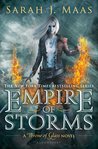
Review: Empire of Storms

Empire of Storms Empire of Storms by Sarah J. Maas
My rating: 5 of 5 stars

Empire of Storms is the penultimate novel of the Throne of Glass series. Like many popular novels it has its flaws, but it is a novel which continues to develop the characters and the relationships between characters. Some readers may harbour a belief that Sarah J. Maas is balancing too many characters and that she does not handle this dynamic element well. Others may argue that this novel does not progress the overall plot particularly well, that they feel that Maas is simply 'making things up as she writes.' I for one find the positives of this novel contribute immensely to the running plot, and thoroughly enjoyed reading this work.

At the end of the day a review should serve a purpose. It should be the same as how teaching English should serve a purpose, or how a house should serve a purpose. If I cannot convince my students that English lessons teach them life skills then I become a poor teacher. A house without the ability to be a shelter to its owners merely becomes four walls and a roof. An excellent review, should therefore seek to convince the reader of the reason why they should or should not continue to participate in using the product. It becomes difficult then to write a review of a series of books, five books into a running series.

Why is this? It is because by this stage most people likely to read this review will be A) readers thoroughly enchanted by the series or B) disenchanted readers seeking to find any reason to continue. I propose therefore, that a review of any book in a series should aim to convince existing readers as to whether it is worthwhile for them to continue reading and to convince readers who have not read the first books in the series to begin reading. With that in mind I will suggest why you should or should not read this series.

1. Why you should read the A Throne of Glass Series:
a) Because it is popular: While this is hardly the most compelling reason to read any novel, often popularity stems from a reason. In this case, there are characters and a story world that characters have bought into and loved.
b) Hulu are making a tv series: Again, while hardly the most compelling reason to read a series, it is a reason. Who wants to be behind with a book series when the television series is releasing?
c) Because of the magic and world: A world of Faery, witches with iron teeth, assassins and evil kings is one of those fractured fairytale settings that is difficult to ignore.
d) Adventure, character development and cliffhangers: You have a group of interesting
e) The moral themes of good versus evil: Given that the main character is an inhuman assassin, yet somewhat relateable, the novels do explore a series of intriguing moral dilemmas that are worth considering in YA fiction.

2. Why you should not read the A Throne of Glass Series:
a) If YA fiction with all its tropes and archetypes is not your cup of tea: They feature in this series somewhat prominently.
b) If you cannot stand wish fulfilment: I skipped a few chapters in this particular book because they were hopelessly sappy wish-fulfilment love scenes. My personal rule of thumb when it comes to romance scenes in books is that you do not have to describe everything as it would be in life and that you should also avoid including information which takes your audience away from your characters and plot. The love scenes in this book in particular break all of those rules.
c) If the idea of a fantasy world of witches, assassins, evil kings etc. does not fascinate you then avoid this series at all costs. They are the focus of this series.

In short I believe the positives for reading this series outnumber the negatives. However, it is up to the individual to choose between whether they want to spend their time (or money) reading this, or investing elsewhere. In terms of popular YA fantasy fiction I rank it amongst the finest series I have read, but as stated it is not without its flaws.

4.5 stars

View all my reviews